


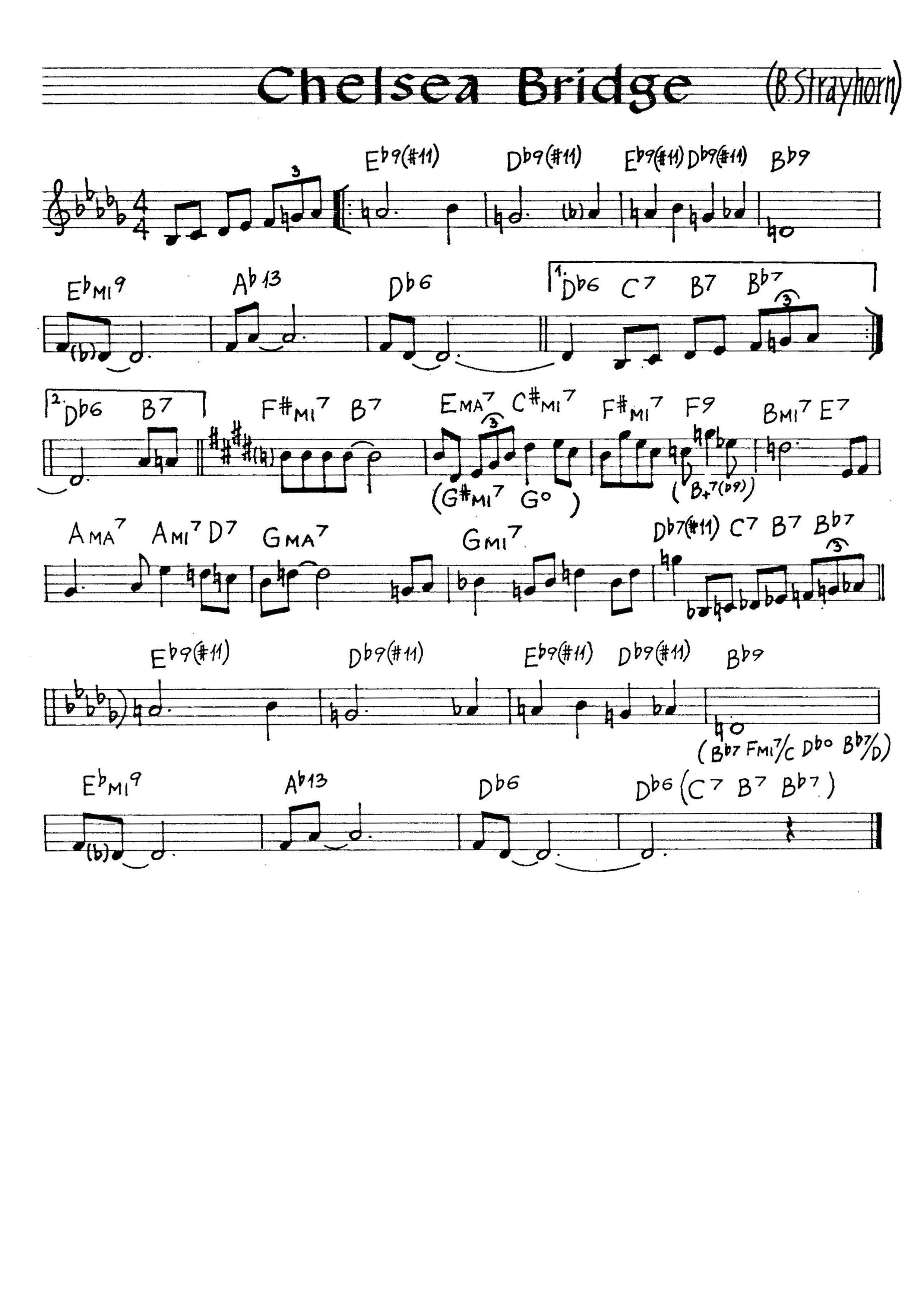

"Chelsea Bridge" is an impressionistic jazz standard composed by Billy Strayhorn in 1941. According to Ellington biographer James Lincoln Collier, Strayhorn was inspired by a Turner or Whistler painting of a London bridge during a European trip, though the painting actually depicted Battersea Bridge rather than Chelsea Bridge.
The piece is written in D♭ major in a 32-bar AABA form, yet it sounds unlike any conventional jazz standard of its era. The A sections open with floating minor-major seventh chords that evoke shimmering water, before resolving through a classic ii-V-I cadence. The bridge modulates boldly through remote keys before returning home via a characteristic descending chain of dominant chords. Deeply influenced by Debussy and Ravel, the composition integrates melody and harmony as an organic whole. Arranger Gil Evans famously declared that from the moment he first heard "Chelsea Bridge," he devoted himself to achieving the same effect.
The original December 1941 recording by the Duke Ellington Orchestra, with Strayhorn himself at the piano and Ben Webster's lyrical tenor saxophone solo, remains the benchmark. Strayhorn revisited the piece as an unaccompanied piano solo on his album The Peaceful Side (1961), offering an intimate window into the composer's own vision.
The Real Book (6th Edition)
The ultimate jazz fake book. A must-have for all gigging musicians.
Check on Amazon.com