


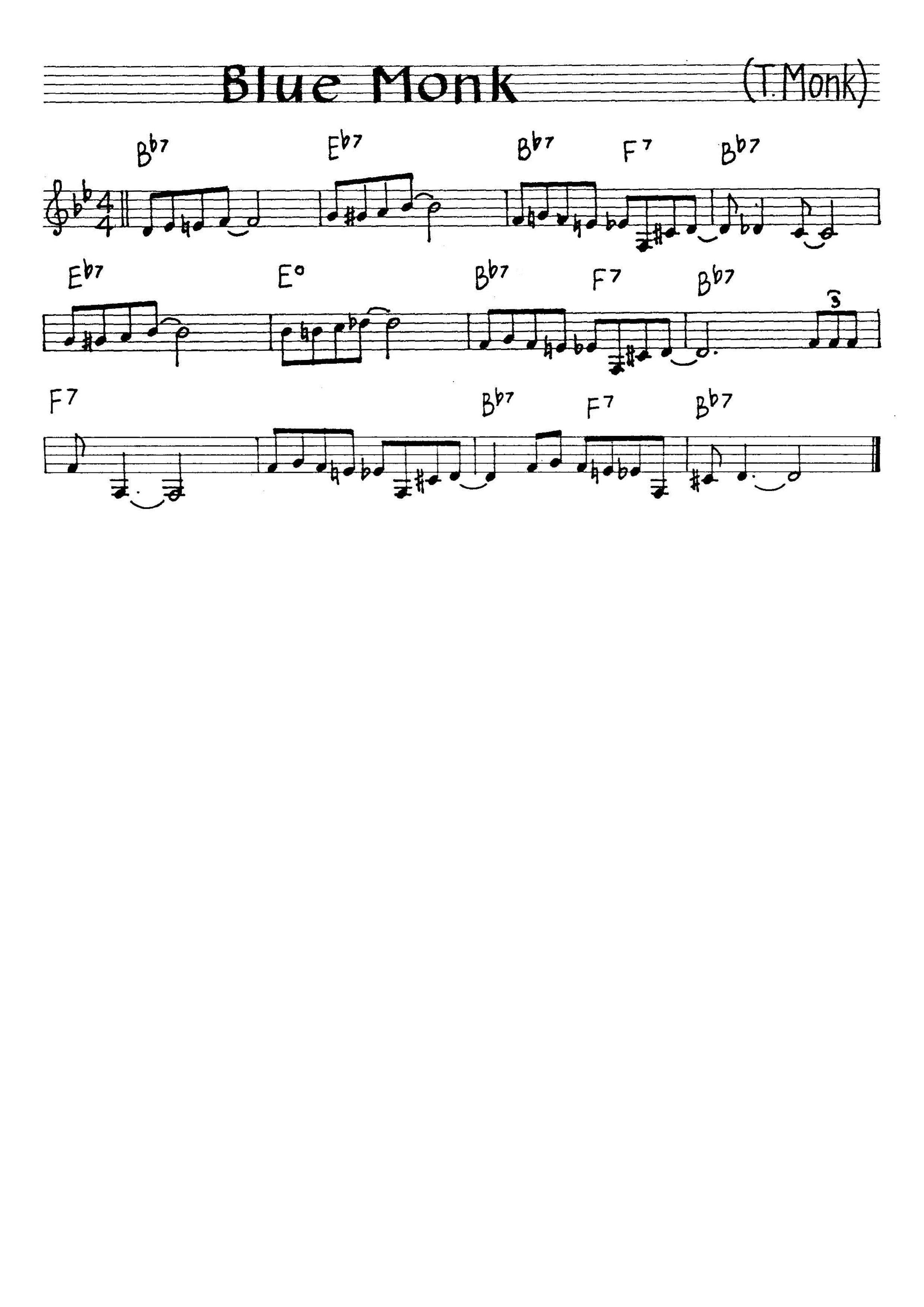

"Blue Monk" is a 12-bar blues composed by pianist Thelonious Monk (1917–1982). First recorded on September 22, 1954, for the album Thelonious Monk Trio, it was reportedly Monk's favorite composition—he recorded it over 30 times during his career, more than any of his works except "'Round Midnight."
The tune is in the key of Bb and follows a standard jazz blues progression. Part of the melody borrows from Charlie Shavers's "Pastel Blue," but Monk transforms it through his signature chromatic approach and idiosyncratic rhythmic placement. The head sounds deceptively simple, built on repetition and space, yet the precise phrasing of the melody—particularly where beats fall within the measure—often trips up players who approach it casually. The combination of blues scale, chromatic movement, and Monk's characteristic angular phrasing makes it both an ideal entry point for beginning jazz musicians and a profound statement of the composer's aesthetic philosophy.
The original 1954 trio recording features Percy Heath on bass and Art Blakey on drums, with Monk soloing over fourteen consecutive choruses. A landmark 1957 live recording with John Coltrane at Carnegie Hall was discovered and released in 2005. McCoy Tyner's version on Nights of Ballads and Blues (1963) is also celebrated.
The Real Book (6th Edition)
The ultimate jazz fake book. A must-have for all gigging musicians.
Check on Amazon.com