


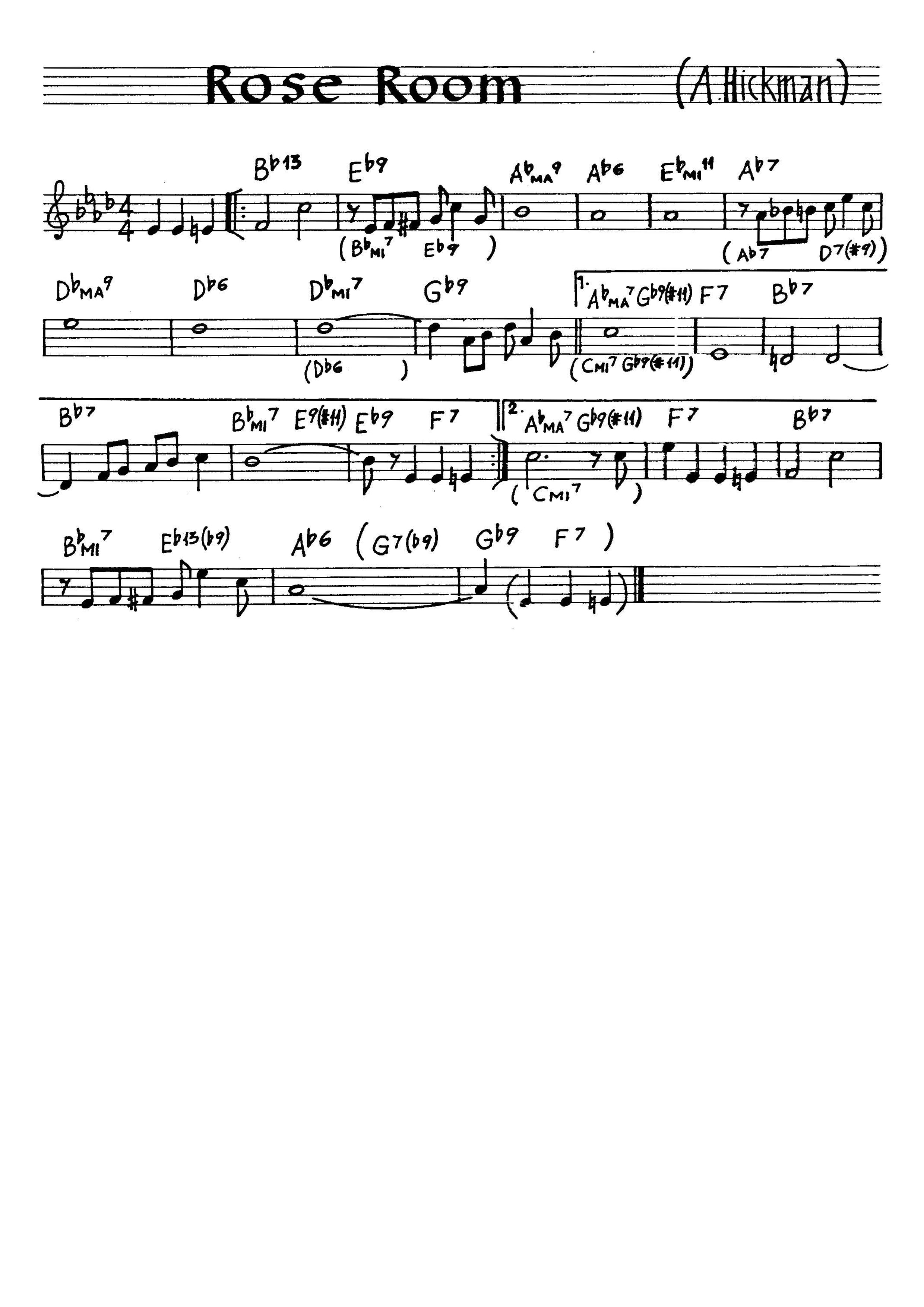

"Rose Room" is an early jazz standard composed in 1917 by Art Hickman, with lyrics by Harry Williams (though it is almost always performed as an instrumental). The tune was named after the ballroom in San Francisco's St. Francis Hotel, where Hickman was leading a band at the time. Composer Alec Wilder praised it as "definitely ahead of its time."
The song is a 32-bar form, commonly played in A♭ (though keys vary by arrangement). Its chord progression provides a smooth, swinging foundation that invites melodic improvisation. The tune's historical importance extends beyond its own merits: Duke Ellington revived its popularity with a seminal 1932 recording, and later used its chord changes as the basis for his 1939 composition "In a Mellotone," one of his most beloved pieces.
The most legendary moment associated with "Rose Room" occurred in 1939, when guitarist Charlie Christian was secretly brought onstage to sit in with Benny Goodman's band. Goodman, unfamiliar with the young guitarist, called "Rose Room" expecting to stump him—only to hear Christian solo brilliantly for 45 minutes straight. That audition launched Christian's career and changed the course of jazz guitar. Ellington's 1932 recording and the Goodman Sextet version with Christian remain essential listening.
The Real Book (6th Edition)
The ultimate jazz fake book. A must-have for all gigging musicians.
Check on Amazon.com