


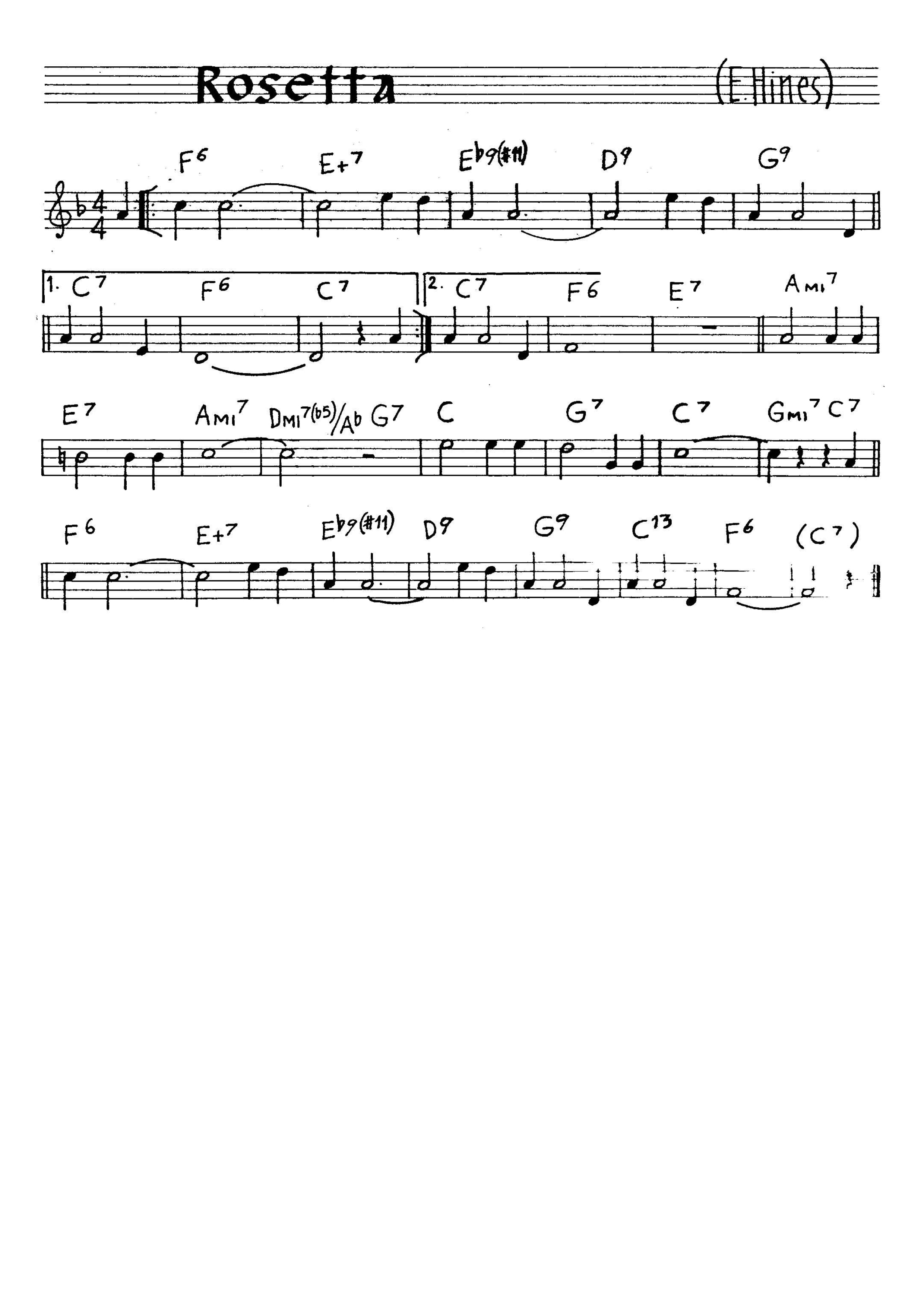

"Rosetta" is a jazz standard written in 1933 by pianist Earl Hines and his arranger Henri Woode. Hines, known as "Fatha," was a pioneering figure in Chicago jazz whose "trumpet-style" piano technique—playing single-note melodic lines with the right hand over a rhythmically independent left hand—transformed the instrument's role in jazz.
The form is a 32-bar AABA in F major. The melody is bright, singable, and built on straightforward harmonic movement, making it an accessible yet rewarding vehicle for improvisation. A key piece of jazz history lies within its chord changes: Charlie Parker used the progression of "Rosetta" as the harmonic foundation for his celebrated composition "Yardbird Suite," making it one of the most important contrafacts in the bebop canon. The connection between the two tunes offers a fascinating window into how bop musicians transformed swing-era material.
The first recording was made by Earl Hines and His Orchestra for Victor Records in February 1933, featuring Hines's dazzling solo work. His two solo piano takes from 1939 are particularly prized, offering a remarkable study in how a master improviser reimagines the same material. Art Tatum also counted "Rosetta" among his favorite vehicles for improvisation.
The Real Book (6th Edition)
The ultimate jazz fake book. A must-have for all gigging musicians.
Check on Amazon.com