


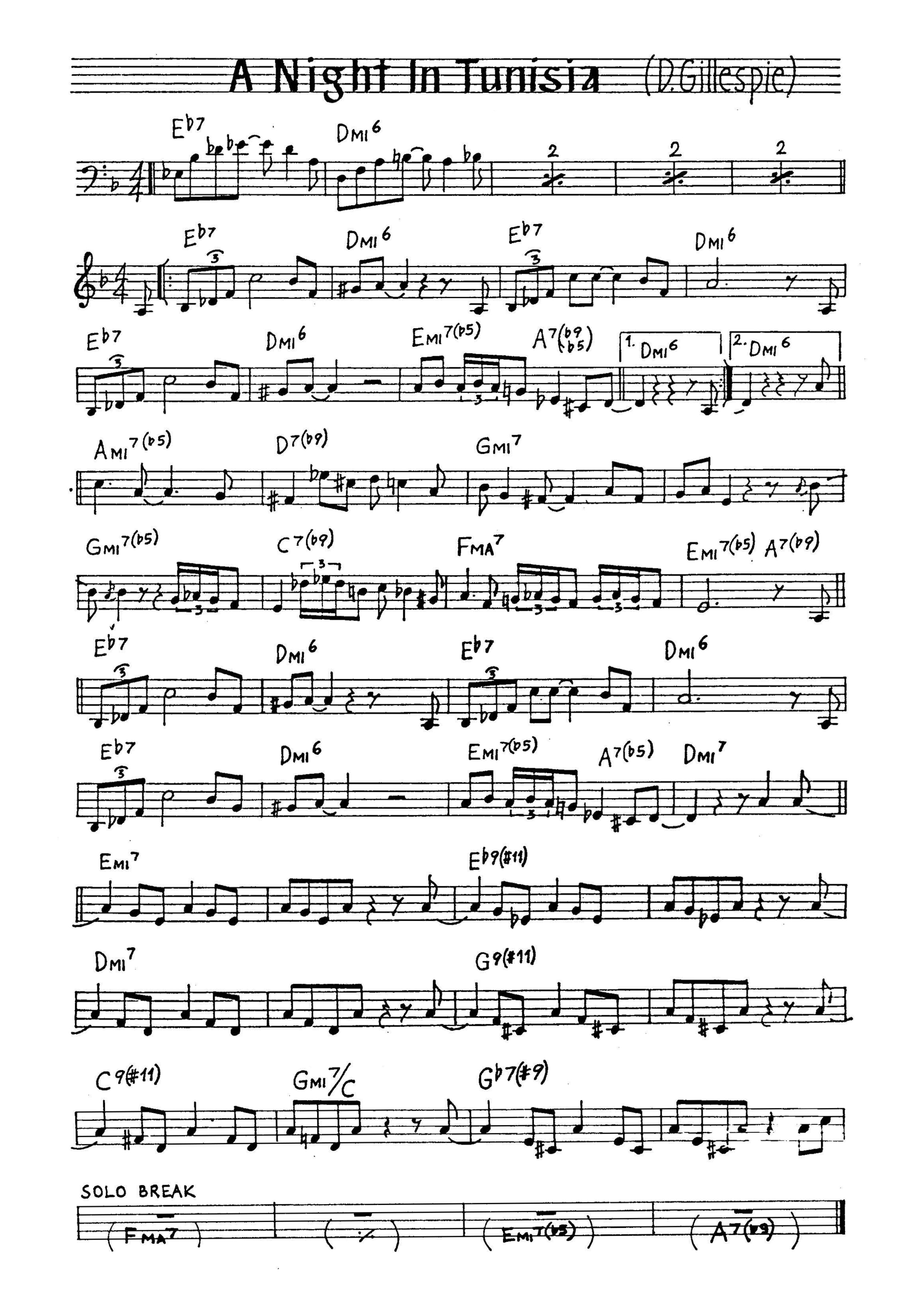

"A Night in Tunisia" is a landmark bebop composition written by Dizzy Gillespie around 1942. A pioneer of Afro-Cuban jazz, Gillespie channeled his fascination with rhythmic and harmonic experimentation into this iconic piece, which has become one of the most performed tunes in the jazz canon.
The tune follows a 32-bar AABA form in D minor. Its most revolutionary feature is the bass line pattern in the A sections, which moves from E-flat to D—a half-step resolution from the flat-II to the tonic that creates the tune's exotic, North African-tinged sound. The harmony employs a tritone substitution (Eb7 to Dm) that became a defining element of the bebop harmonic vocabulary. The bridge shifts to a major key, providing bright contrast, and the famous interlude break section adds dramatic tension before the final statement. The tune seamlessly blends Afro-Cuban rhythmic energy with sophisticated bebop harmony.
Gillespie recorded the tune numerous times, but his 1946 session with Charlie Parker stands as the historic benchmark. Art Blakey and the Jazz Messengers made the tune a concert staple, with multiple electrifying live recordings that have become essential listening for any jazz fan.
The Real Book (6th Edition)
The ultimate jazz fake book. A must-have for all gigging musicians.
Check on Amazon.com