


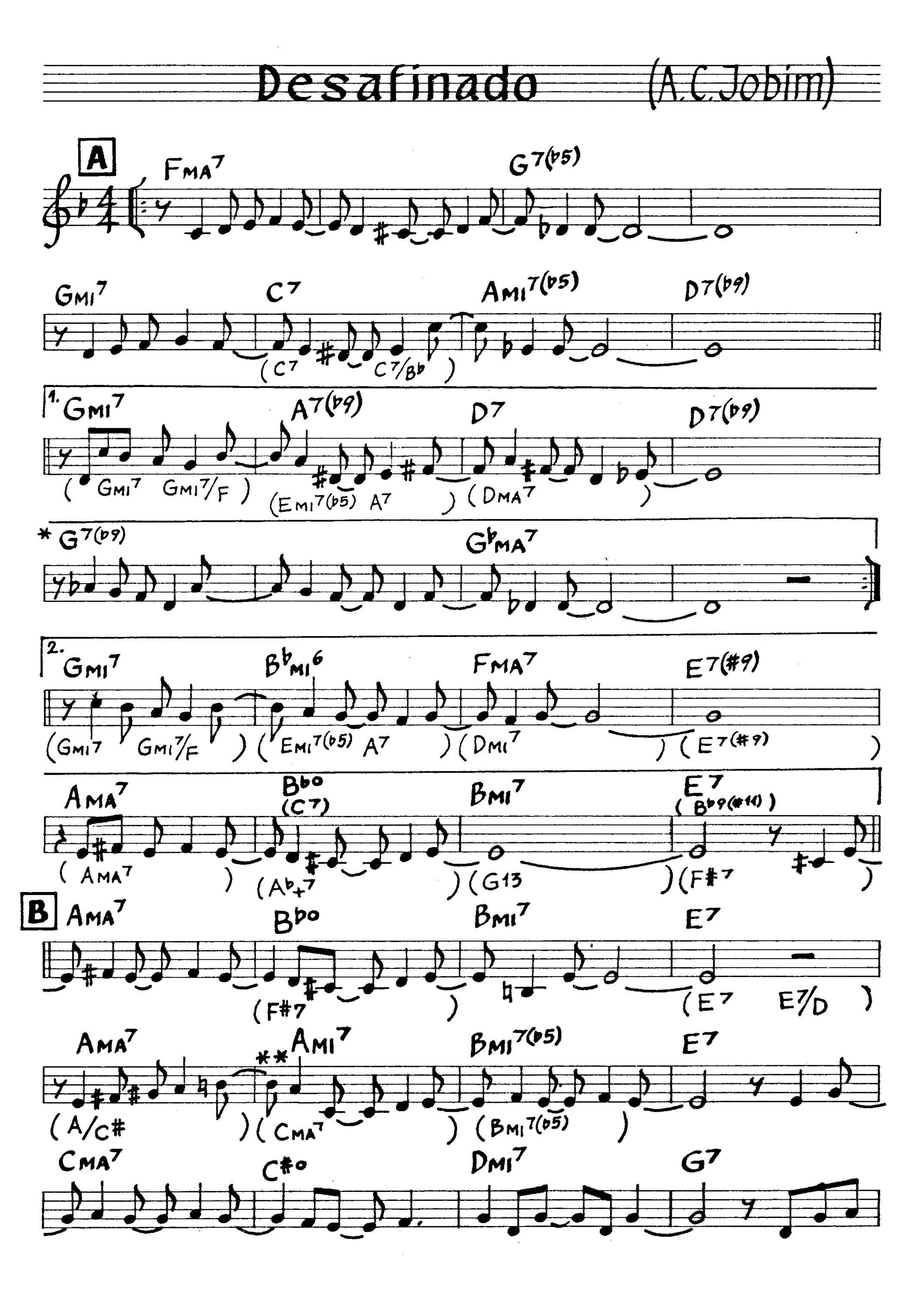
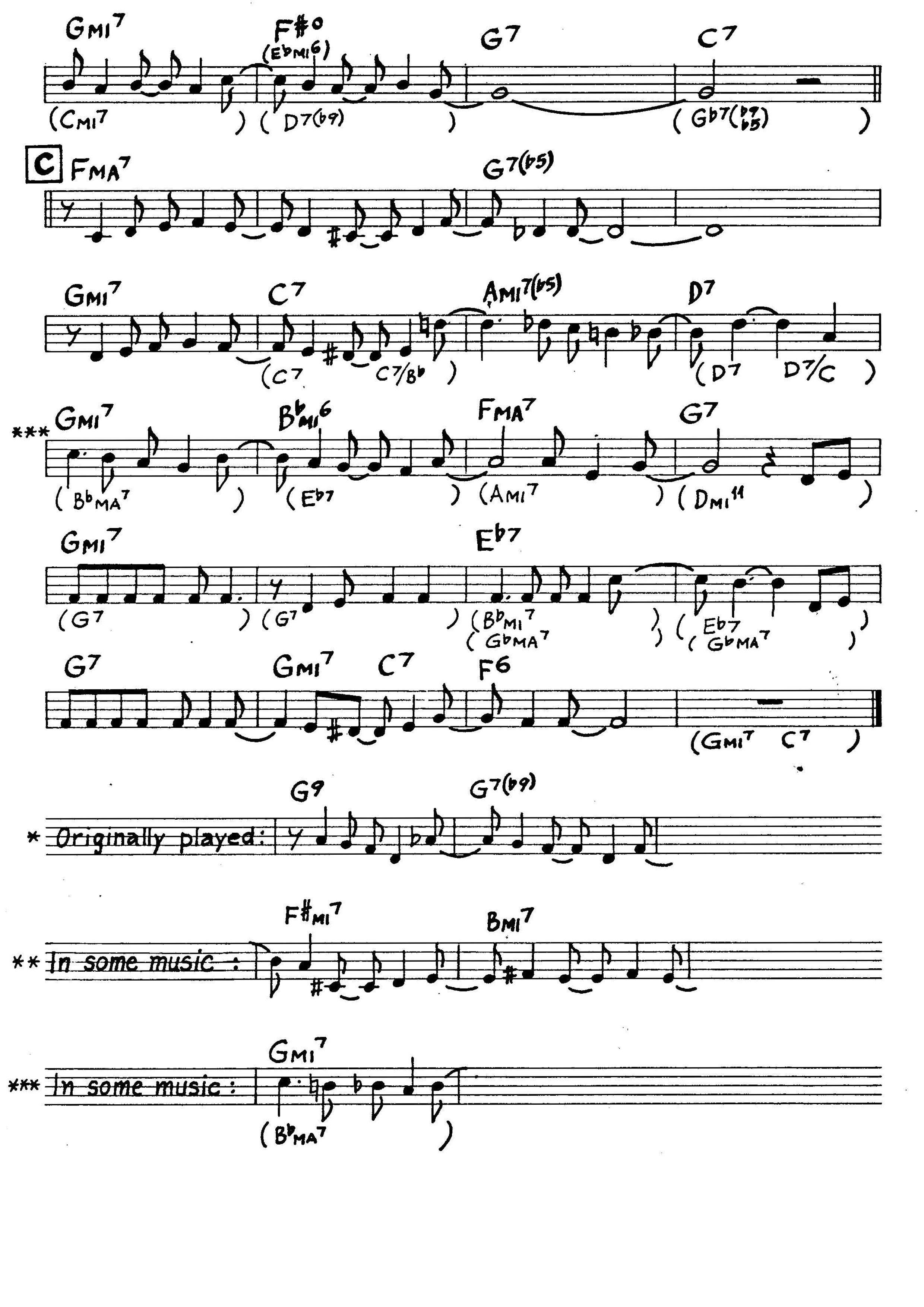

"Desafinado" (Portuguese for "out of tune") is a landmark bossa nova composition by Brazilian composer Antonio Carlos Jobim, with Portuguese lyrics by Newton Mendonça. Written in 1959, the song was a witty response to critics who claimed that bossa nova was music for singers who cannot sing.
The piece has an unusually long 68-bar form, far removed from standard 32-bar song structures. It is most commonly played in F major among instrumentalists. The melody opens with a four-note ascending diatonic motive and is laced with non-diatonic intervals and chromatic shifts throughout—a deliberate musical embodiment of being "out of tune." Jobim's harmonic language is characteristically sophisticated, featuring chromatically descending ii-V progressions, unexpected key center shifts, and diminished passing chords that create constant tonal movement. Despite its complexity, the melody maintains an accessible, conversational quality that belies the demanding harmonic framework beneath it.
The earliest recording is by João Gilberto on his 1959 debut album Chega de Saudade, arranged and conducted by Jobim himself. The tune gained international fame through Stan Getz and Charlie Byrd's 1962 instrumental version on their album Jazz Samba, which became a major hit and helped ignite the worldwide bossa nova craze.
The Real Book (6th Edition)
The ultimate jazz fake book. A must-have for all gigging musicians.
Check on Amazon.com